First: Project Background and Rationale
This project comes amid the extremely difficult humanitarian reality facing the people of the Gaza Strip — particularly displaced families living in shelters and temporary camps — where prolonged displacement, the destruction of infrastructure and the disruption of local supply chains have sharply worsened food insecurity. This has been compounded by an unprecedented rise in the prices of basic foodstuffs alongside the collapse of families’ purchasing power and the loss of their sources of income, making bread — the most essential and most consumed staple food in the local context — a recurring daily challenge for these families. At the same time, the local bakery sector has suffered heavy damage, with a number of bakeries shutting down or operating at limited capacity, which has reduced the supply of bread in the local market, lengthened queues at points of sale, and cost bakery workers their livelihoods.
On this basis, the project was designed as an urgent humanitarian intervention that addresses the basic food needs of displaced families on the one hand, and supports the continuity of local bread-producing facilities on the other — achieving greater efficiency in the use of resources and reducing dependence on external supply routes.
Second: Overall Objective and Target Group
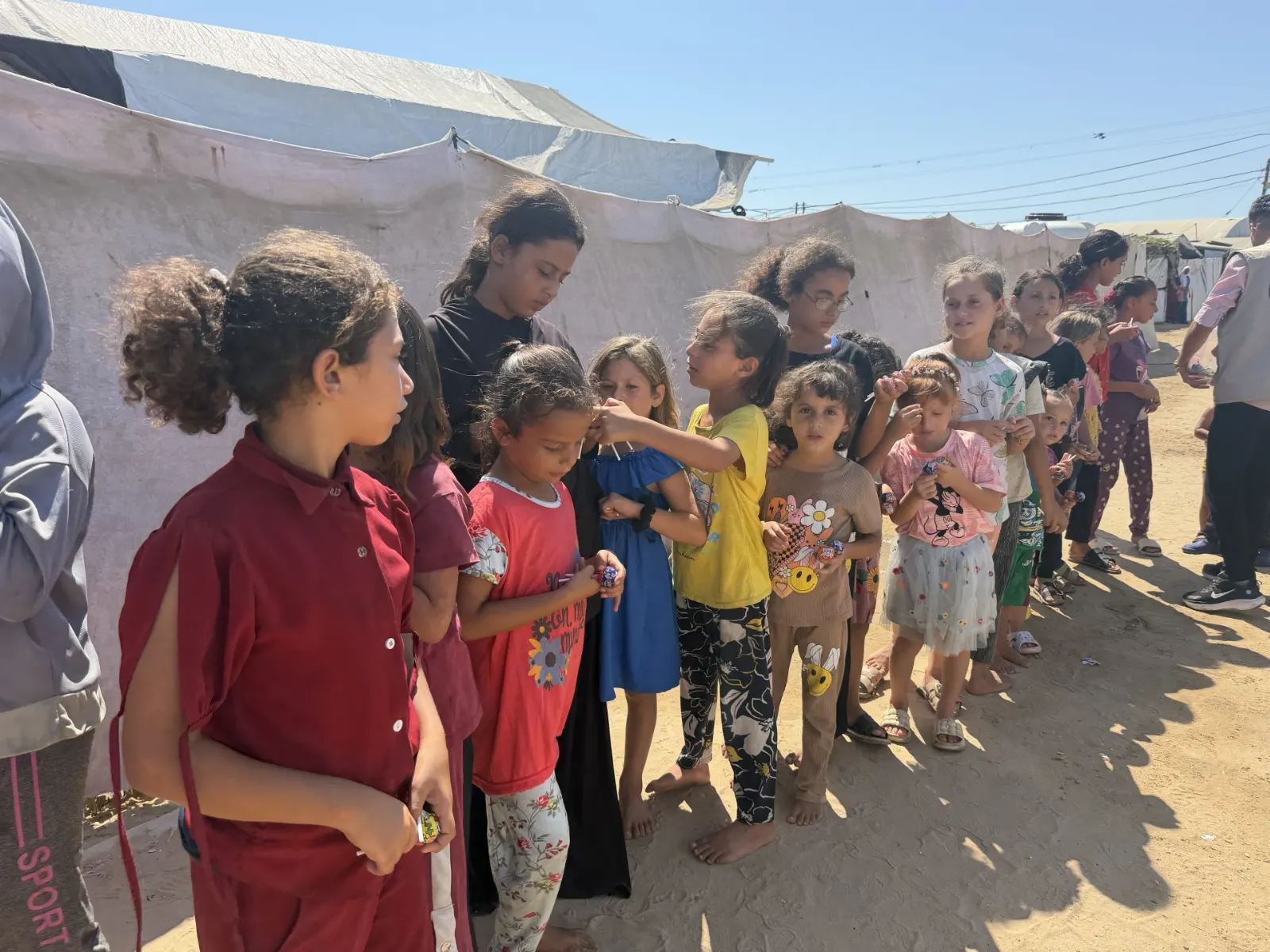
The project aims to secure the daily distribution of fresh bread to 77 displaced families — around 300 individuals — in Al-Shaimaa camp in the Deir al-Balah area, through direct support to the community bakeries operating there. The target group was selected according to clear targeting criteria that consider the degree of need and each family’s economic situation, giving priority to the most vulnerable cases — including households headed by women and families with children, persons with disabilities, the elderly, or people with chronic illnesses — in coordination with the relevant local committees and bodies to ensure the accuracy of the beneficiary lists and to avoid duplication with other organisations working in the area.
Third: Implementation Methodology
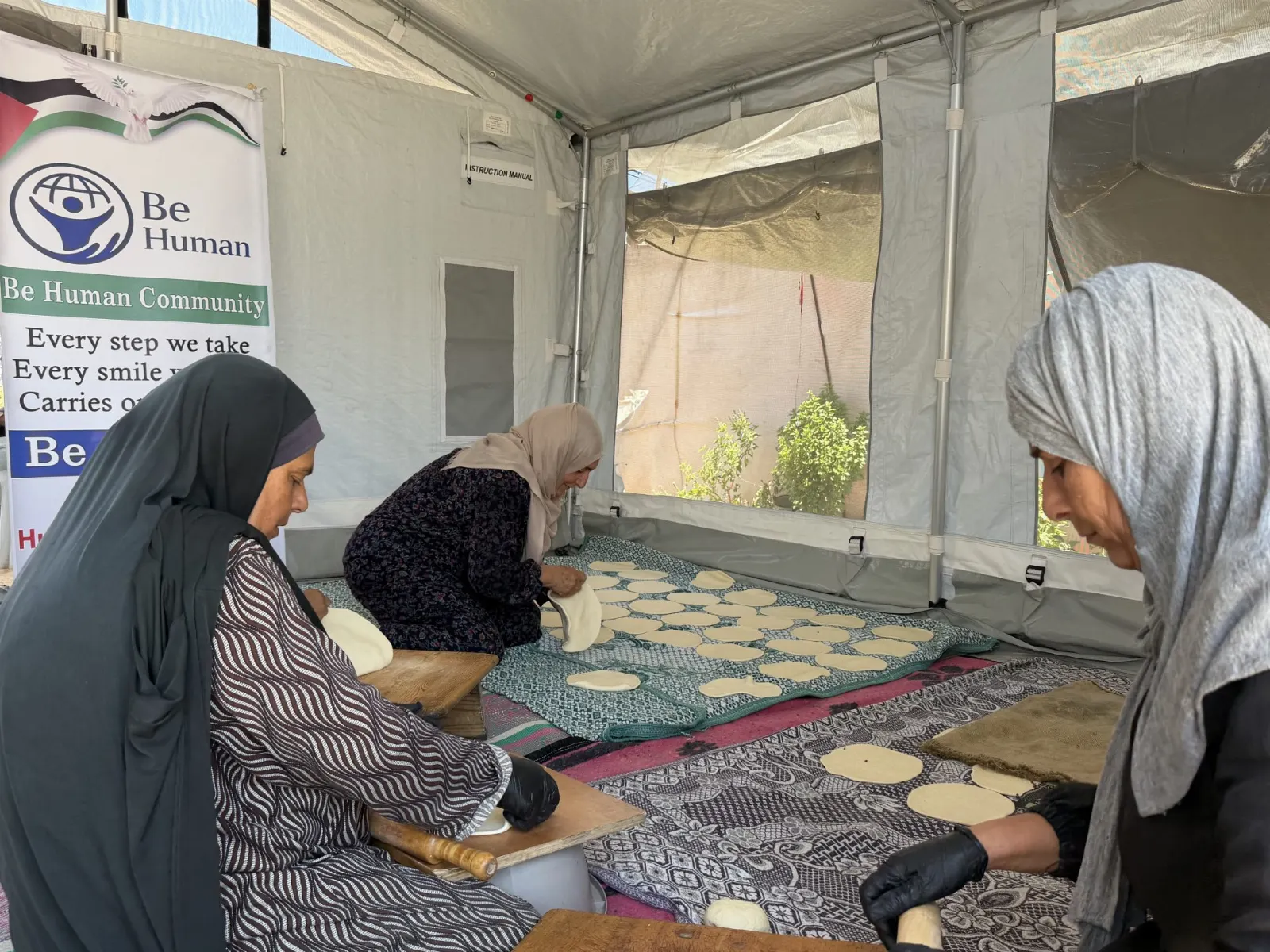
The project follows a dual-impact approach that combines meeting a basic, recurring food need of the targeted families with a fresh and culturally appropriate product, and supporting the continuity of local bakeries — helping preserve the livelihoods of their workers and keeping bread available in the local market. The intervention is implemented by contracting bakeries operating in the area at agreed unit prices and defined standards of quality, weight and food safety. The contracted quantities are produced and delivered daily to the targeted families at the distribution site, ensuring the bread arrives fresh and on a regular schedule, and sparing families the burden of travelling and waiting in queues and the risks that come with them.
Fourth: Monitoring and Accountability
Implementation is subject to continuous monitoring and oversight, including daily verification that the quantities distributed match the contracted quantities, monitoring of the bread’s quality, weight, and transport and storage conditions, and documentation of every delivery and receipt for each beneficiary family. The project also applies complaint and feedback mechanisms that allow the targeted families to share their observations confidentially and easily — reinforcing transparency and accountability towards the affected population and ensuring compliance with recognised humanitarian standards, the principles of non-discrimination and the preservation of beneficiaries’ dignity — in addition to periodic reports documenting progress and results.
Fifth: Phase Two (Extension)
Building on the results achieved during the first phase of implementation — and the effectiveness and community acceptance the model demonstrated — the project has been extended into a second phase running from 10 August until 10 September 2026. This phase aims to ensure that bread continues to reach the same targeted families in Al-Shaimaa camp without interruption, recognising that any pause in the intervention — even a short one — would push these families back into the same critical situation they faced before implementation began. Phase two maintains the previously adopted targeting criteria and implementation and monitoring mechanisms, while applying the lessons learned from phase one to improve the regularity of distribution and the efficiency of resource use.
Sixth: Expected Results
The project is expected to improve the food consumption of the targeted families and reduce their reliance on negative coping strategies, ease the financial and psychological burden of securing daily food, and preserve the operation of local bakeries and the livelihoods of their workers — strengthening the resilience of the local community and contributing to a stable supply of bread in the targeted area throughout the implementation period.